

Immigration and Customs Enforcement (ICE) visits can create confusion, legal risk, and workplace disruption—especially for small and mid-sized employers without dedicated in-house compliance teams.
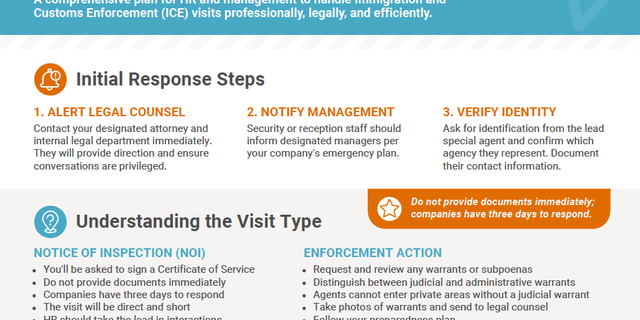
That’s why NorthstarPMO created this practical, step-by-step checklist to help HR leaders, operations teams, and front-line managers respond calmly and confidently. From understanding warrant types to protecting employee rights and securing sensitive documents, this guide offers clear, actionable direction in a high-stakes moment. Use it to strengthen your response plan and ensure your team knows what to do before, during, and after a potential ICE visit.
Download the GuideFrequently Asked Questions
Your first step is to notify your internal legal counsel or designated attorney before any engagement. From there, ensure a manager verifies the ICE agents’ identities and escorts them to a private space while you confirm the purpose of the visit. These early actions help maintain control, minimize disruption, and ensure all communication is legally guided.
A Notice of Inspection (NOI) typically involves a Certificate of Service and allows three business days to provide I-9 documentation. Enforcement actions are more immediate and may involve warrants or subpoenas. Understanding the type of visit helps determine how to respond, what access is legally required, and where to involve legal counsel.
Only if they present a judicial search warrant or if the employer grants consent. ICE agents cannot enter private or restricted areas with just an administrative warrant. Escorting agents at all times and confirming the scope of any warrant helps protect sensitive areas and ensures compliance without overextending access.
Following an ICE visit, document everything—agent names, requested items, any materials taken, and where interactions occurred. Debrief with leadership to evaluate what went well and identify gaps in your response plan. It’s also important to address employee concerns, reinforce your organization’s values, and update protocols based on lessons learned.
Small and mid-sized companies often lack internal resources to build or maintain detailed response protocols for compliance events like ICE visits. Partnering with experienced HR professionals can help you strengthen documentation practices, train managers on proper response steps, and conduct policy reviews to reduce legal risk.